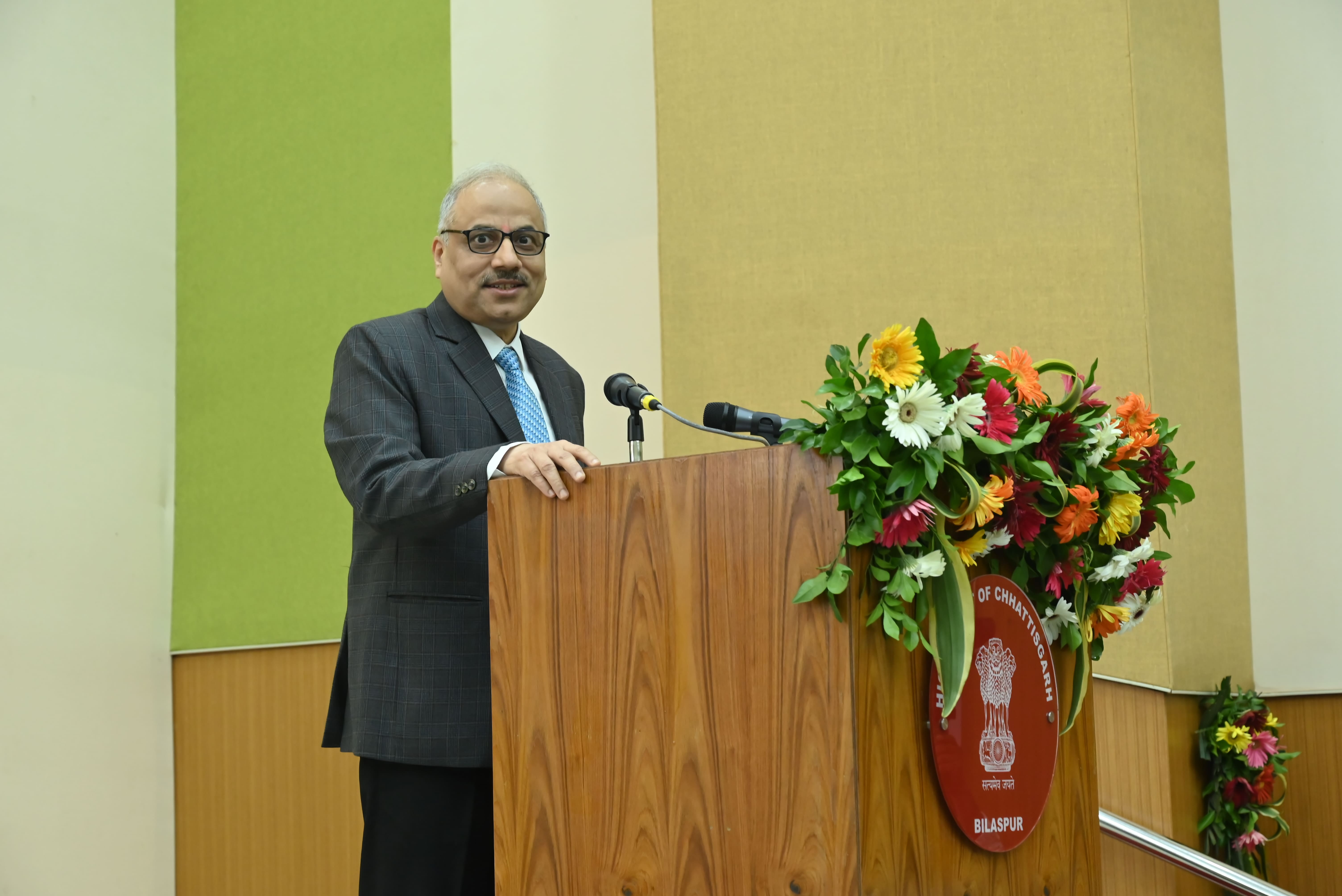
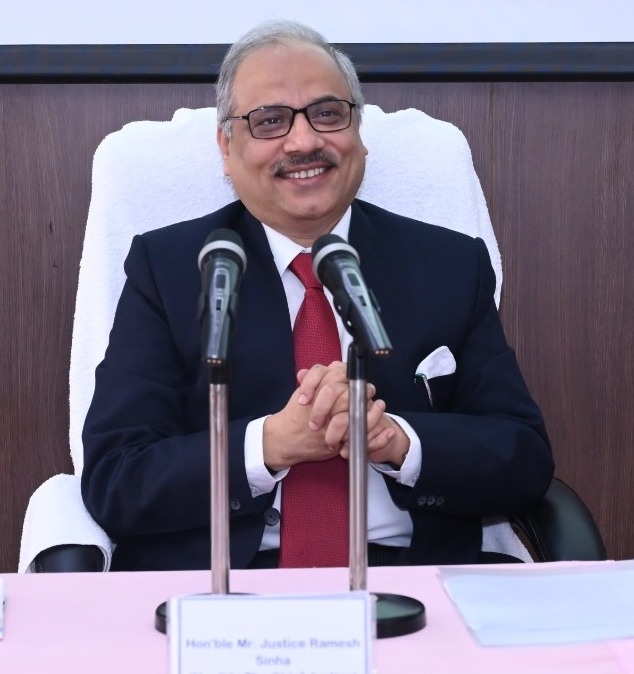
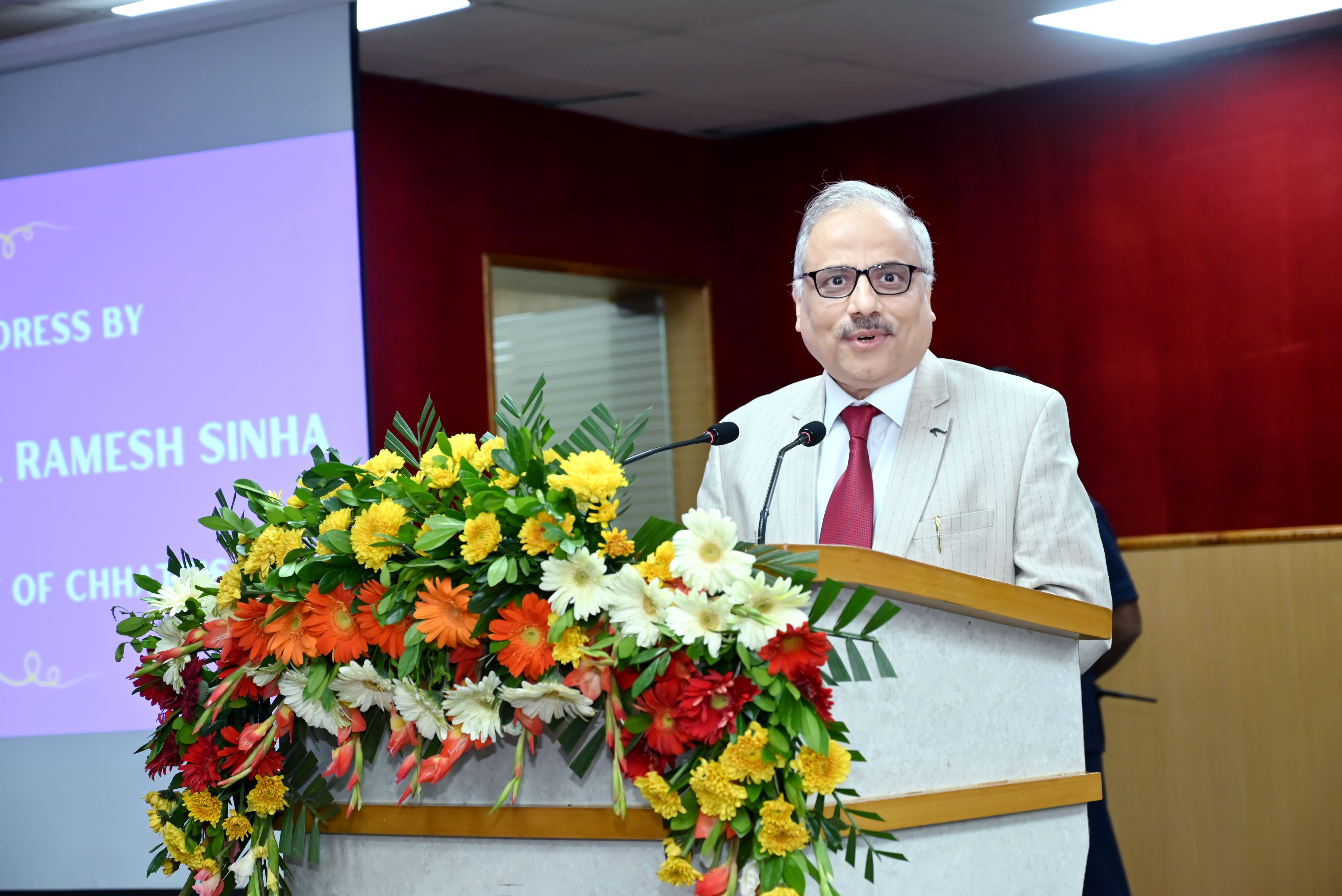
Hon'ble The Chief Justice

(Hon'ble The Chief Justice)
1. Notification No. 6878/Checker Bilaspur, Dated 09/04/2026
2. Order No. 52 (App.) Bilaspur, dated 09/04/2026
3. Endt. No. 6798 Bilaspur, Dated 08/04/2026
4. Notification No. 281/Confdl./2026 Bilaspur dated 08/04/2026
5. Order No. 279 /Confdl./2026 Bilaspur dated 08/04/2026
6. Order No. 277 /Confdl./2026 Bilaspur dated 08/04/2026
7. Notice for Recruitment to the Post of Junior Judicial Assistant (Computer).
8. Order No. 269 /Confdl./2026 Bilaspur dated 07/04/2026
9. Notification No. 6656/R.(J.)/2026 Bilaspur dated 06/04/2026
10. There shall be a farewell of Hon'ble Mr. Justice Arvind Kumar Verma, Judge, High Court of Chhattisgarh, Bilaspur on 07 April 2026 at 03:30 p.m. in the Chief Justice’s Court.
1. The heinous offence of sexual assault culminating in murder,
established through cogent medical evidence and reliable DNA profiling,
conclusively proves the guilt of the appellant beyond reasonable doubt,
fully satisfying the standard of proof; if such evidence inspires the
Court’s confidence, it can serve as the sole basis for conviction.
2. Courts, under Article 226, ordinarily refrain from interfering in
tender matters; however, such restraint yields where State action is
arbitrary or contrary to tender conditions. Where a tender grants
complete relaxation to Micro and Small Enterprises (MSEs), any dilution
at the evaluation stage—by assigning marks under an exempted
criterion—defeats the tender and violates Article 14. Such action reflects
non-application of mind, vitiates the process, and justifies quashing of
the tender with liberty to initiate a fresh process in accordance with law
3. Courts, in exercise of judicial review under Article 226 of the Constitution of India, will not ordinarily interfere in economic or socio- economic policy decisions of the State, particularly in the absence of violation of statutory or constitutional provisions, and a Public Interest Litigation challenging such policy is liable to be dismissed on grounds of delay, laches, and lack of genuine public interest.
4. Once a dying declaration is found to be authentic inspiring
confidence of the Court, then the same can be relied upon and can be
the sole basis for conviction without any corroboration.
5. Rejection of claim for employment under the Rehabilitation Policy on the
basis of an unnotified cut-off date, arising from an internal administrative
decision is legally unsustainable.
6. The Court while granting or refusing to grant injunction should
exercise sound judicial discretion to find the amount of substantial
mischief or injury which is likely to be caused to the parties.
7. “The principle of res judicata applies equally to writ
petitions under Article 226 of the Constitution of
India. Once an issue has been finally adjudicated
between the same parties and affirmed up to the
higher Courts of India, the same cannot be
reopened in a subsequent writ petition by adopting
a different stand. Re-litigation of an issue already
concluded is impermissible.”
8. “Under Order VII Rule 11 CPC, only plaint
averments has to be considered, not the defence
of the defendant. Rejection of plaint is
impermissible where any relief claimed falls within
civil court jurisdiction. The jurisdiction of the Debt
Recovery Tribunal under the SARFAESI Act is
limited in nature.”
9. An artificial distinction cannot be drawn in favour of a particular accused when all are charged with participation in a common offence. Where the prosecution case rests on the same set of evidence against all accused, it would be impermissible to acquit one accused while convicting the others on that very evidence, unless a strong and compelling case for acquittal is independently made out in favour of such accused.
10. Mere participation in the examination does not confer any vested or indefeasible right to appointment or even to declaration of result. The State is competent to cancel a recruitment process prior to its culmination if found inconsistent with statutory provisions, in order to prevent perpetuation of illegality. The doctrine that “rules of the game cannot be changed after commencement” is inapplicable where the change is necessitated to ensure conformity with binding statutory rules.
1. DP College Education Committee gets relief from High Court.
2. High Court grants relief to daily wage employee.
3. High Court expresses displeasure over hearing of maintenance case despite stay order
4. HC refuses relief to railway officer, flags attempt to stall probe.
5. Posting of Principal Judges in Juvenile Justice Boards.
6. Wife Burnt Alive; Husband's Life Imprisonment Sentence Upheld.
7. Interim Bail Granted to Amit Baghel.
8. High Court Quashes Action Against Sub-Registrar in Government Land Registry Case.
9. Relief for Road Accident Victims; Claims Will Not Be Dismissed Based on Time Limits: High Court
10. HC directs govt to implement time-bound prison reforms.